
Pitching for 'zero tolerance" against terrorism, Prime Minister Narendra Modi on Tuesday told leaders of the five-nation grouping BRICS that the "choices" they make now will shape the future of the world at large.

Prime Minister Narendra Modi has favoured broadening of the strategic partnership with Russia in nuclear, defence and energy sectors and invited President Vladimir Putin to visit Kudankulam atomic power project during his trip in December for his annual summit.
.jpg)
The ministers also expressed concern over the slow pace of global economic recovery and stressed that 'the uncertainty regarding economic growth and policy responses in developed countries could lead to increased volatility in financial markets and further affect the international economy'.

India is keen on the issue of equal share holding since it doesn't want a repeat of the distortions that have crept into Bretton Woods institutions like International Monetary Fund, World Bank and the Asian Development Bank in which rich countries like the US and Japan have a strangle hold.

Prime Minister Narendra Modi arrived in Berlin for an overnight stopover on his way to Brazil for the Brazil, Russia, India, China and South Africa (BRICS) Summit meeting that will address regional crises and security threats to restore a climate of peace while advancing global economic stability.
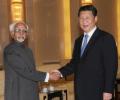
Vice President Hamid Ansari on Monday held talks with Chinese President Xi Jinping and conveyed the new Indian government's interest in furthering bilateral ties, even as he flagged off India's concerns over border related issues during his parleys with the top leadership in Beijing.

According to Chinese officials, its current investments in India stands at $1.1 billion, mostly in Gujarat.
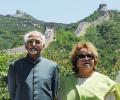
India and China have to narrow down differences and build on convergences by exploiting the potential of Panchsheel, the five principles of peaceful co-existence propounded by the two countries along with Myanmar in 1954, Vice President Hamid Ansari said on Saturday.

India and China ties are likely to enter into a "new age of cooperation" especially in trade in view of Prime Minister Narendra Modi's knowledge of Chinese investment promotion and his plans for economic reforms, according to an official think-tank in Beijing.

Playing down its unsuccessful bid to establish diplomatic ties with Bhutan, China on Monday said it is glad to see New Delhi and Thimphu develop their relations further during the just-concluded visit of Prime Minister Narendra Modi.

Chinese Foreign Minister Wang Yi will be visiting New Delhi on Sunday as a special envoy of President Xi Jinping to establish political contacts with the new Indian government amid hopes here of an upswing in bilateral ties due to Prime Minister Narendra Modi's familiarity with China.
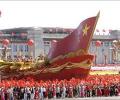
China's new leadership headed by Xi ruled out massive stimulus similar to the one in 2008 which amounted to $645 billion to tide over the global economic crisis.

Chinese police have mobilised one lakh-strong citizen army in Beijing with monetary rewards to gather intelligence against potential terror attacks as part of national anti-terrorism campaign, according to media reports.

Four knife-wielding persons on Tuesday went on the rampage at a busy railway station in China's Guangzhou city injuring six people, including two women and a foreigner, in the third such attack in over two months with authorities blaming the first two on militants from Xinjiang.

The 15-member Board of BFA included former Japanese prime minister Yasuo Fukuda, former Malaysian prime minister Abdullah Ahmad Badwai, former Singapore prime minister Goh Chok Tong and former prime minister of France Jean-Pierre Raffarin besides former US Treasury Secretary Henry Paulson.

Making waves with trade deals worth billions of dollars during his first European tour, President Xi Jinping put up a strong defence of the monopoly of power by the Communist Party of China saying that China had settled for a one-party system after unsuccessful experiments with multi-party democracy.
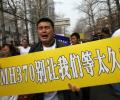
Angry relatives of Chinese passengers onboard the ill-fated Malaysian airliner clashed with the police outside the Malaysian embassy in Beijing on Tuesday, accusing the government of "deception" even as the search for the wreckage of the jet has been shifted to the southern tip of the Indian Ocean after getting new data.

Over 300 angry relatives of Chinese passengers aboard the Malaysian airliner on Tuesday clashed with security personnel outside Malaysia's embassy in Beijing as China demanded the truth about the jet's mysterious crash.

Expressing concern over revelations by whistleblower Edward Snowden alleging that the NSA spied on Chinese leaders and businesses, China on Monday demanded that the US explain the facts and stop surveillance activities.
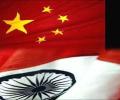
China is willing to encourage Chinese companies to invest in Indian industrial parks to produce personal computers, Internet equipments, cell phones and televisions.
 © 2026 Rediff.com - Advertise with us - Disclaimer - Privacy Policy - Sitemap - Feedback - About us - Terms of use - Grievances